
About Us

A Legacy of Land Stewardship in Napa
Kelly Family Vineyards was established to connect families and friends by sharing fine wine.
The Kelly name has a long and colorful history. If you share it, then connect with us. If you love Great Wine, join our Kelly Family Clan!
Download the free Kelly family history poster and get a frameable printed copy when you become part of the Kelly Family Clan (even if your last name isn’t Kelly!)
Meet the Team
-
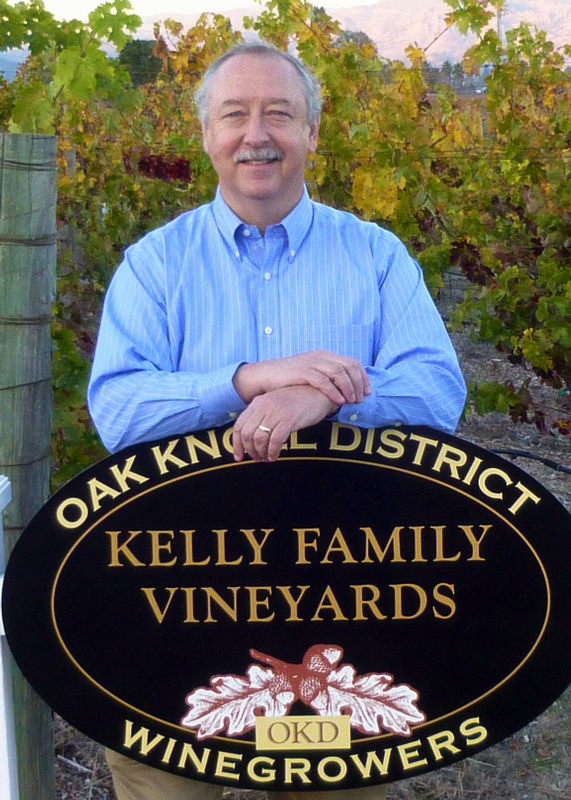
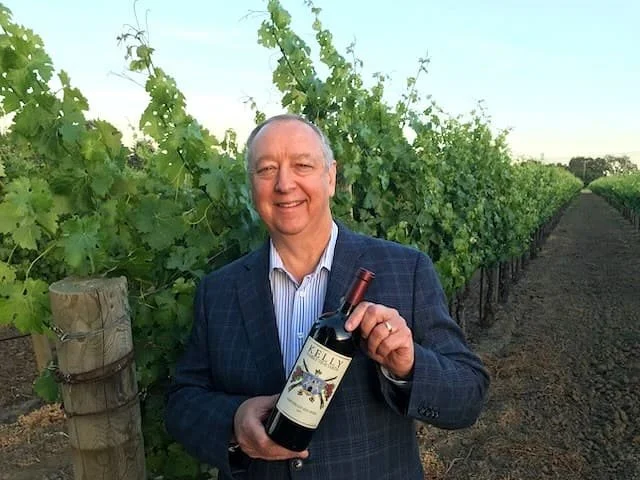
Gene Kelly
Proprietor
Continuing his family’s 50+-year Napa Valley legacy and passion for agricultural preservation, Gene along with his wife, Paula, and Son Jacob Kelly, has been creating craft wine for his family and friends for years. He is thrilled to see the actualization of his life-long dream of growing grapes and producing premium quality wines.
In addition to Kelly Family wines, our Premium quality Cabernet Sauvignon grapes are provided to Alpha Omega and Stags Leap wineries.
-
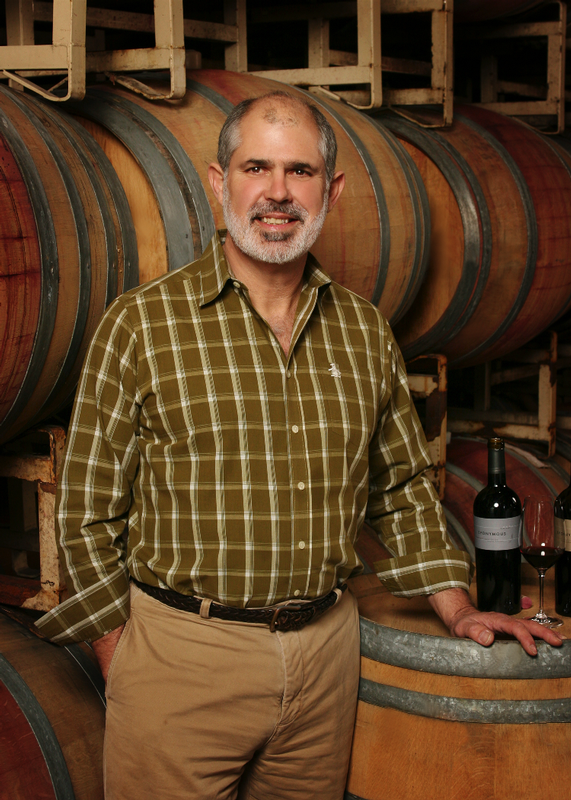
Bob Pepi
Winemaker
In 1966, Bob’s family bought a ranch with vineyards in the Napa Valley, thinking it a retreat from the city. In 1980, along with his father, Bob decided to start a winery on the property, giving it the name they each carried, Robert Pepi. Their first harvest was in 1981, and he has been making wine ever since. After the winery sold, Bob became a consulting winemaker, working mainly in California, but also in Argentina, Chilie and Italy.
-
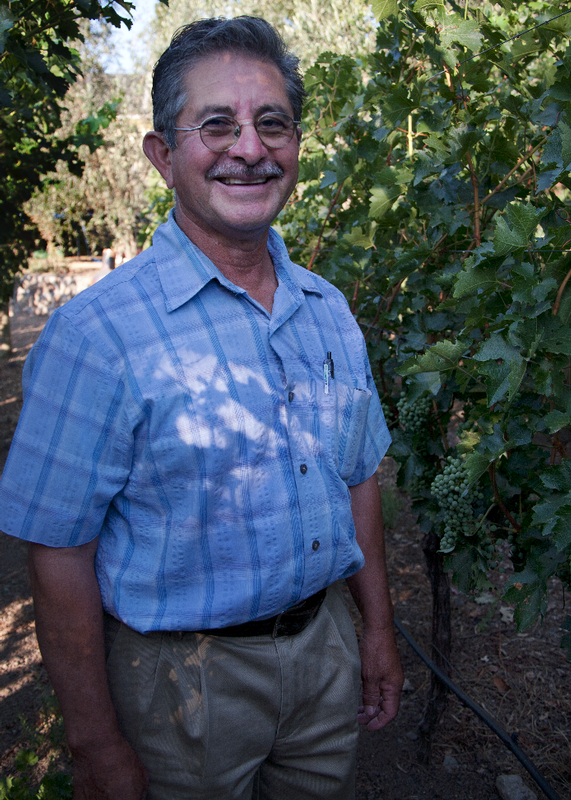
Mario Bazán
Vineyard Manager
The roots of Mario Bazán go back to 1973 when Mario immigrated to the Napa Valley from his native Oaxaca, Mexico. When Mario arrived in the Napa Valley, he was immediately charmed by its beauty and energized by the vigorous wine growing atmosphere he observed. He continued to hone his skills over the next four decades as he advanced step-by-step from a general laborer to grape grower. He worked for several of the most renown wineries in the Napa Valley growing and managing their fruit. Today, Mario has his own estate vineyard and his highly regarded vineyard management company is farming several hundred acres throughout Napa and Sonoma Valleys. Including KFV.
Our Family Purpose
A Legacy of Land Stewardship in Napa
In 1968 Our branch of the Kelly Family expanded westward putting down deep roots in the world-famous Napa Valley.
My father, Harold Kelly, was a driving force behind the preservation of Napa Valley’s agricultural community. As a former city-councilman and founding member of the Land Trust of Napa County, he has been recognized for his lifetime of excellence in conservation by Senate, decorated by the Land Trust of Napa County, Featured in James Conaway’s Book, “Napa: The Story of an American Eden”, and was a key player in establishing the Connolly Ranch Education Center which has been responsible for teaching over 100,000 children about farm life and nature over the decades.
I have continued this legacy as Napa Rotary President, and Chairman of the Connolly Ranch Educational Center. The Kelly Family Vineyard is an extension of our work in preserving the land.
Over the past 40 years the Kelly Family has continued to establish ourselves as leading advocates of agricultural land preservation and have helped protect what has often been described as California’s Garden of Eden… the Napa Valley.
We currently only produce a few hundred cases of wine per vintage in an effort to focus on sustainable agriculture and true craftsmanship in our wine. Our goal is to create a wonderful bottle of wine worthy of being shared with close family and friends while you tell your family story.
We hope you that you will enjoy our wine as you connect with family and friends. Thank you for helping us continue on our legacy mission. May the Lord Bless you!
We are also a family of faith. For honest answers to difficult questions about God and Jesus, go to www.EveryStudent.com
The Kelly Family History
The Irish name Kelly (and its variations) has a long Gaelic heritage to its credit. The original Gaelic form of the name Kelly is O Ceallaigh or Mac Ceallaigh and is derived from the word Ceallach, of uncertain origin, traditionally said to mean “bright-headed.” (Red heads?)
Alternatively it could mean “contentious” or “strife” which has been adapted by recruiting sergeants to mean “Brave Warrior” in many English-speaking armies (such as that of the Irish Army, British Army, and Australian Army).
It also could mean ceall “church.” It became Kelly from the anglicized pronunciation of Ó’Ceallaigh, the Irish form of the surname meaning “descendants of Ceallach.” Our family coat of Arms quotes Proverbs XX “ Our God is a Strong Tower to Me” and the core feature of the original crest is a tower!
The green valleys and mountains of Ireland certainly have produced many distinguished family names, not the least of which is Kelly.
Researchers found that the family name Kelly was first used in southwest Ireland south of Dublin where they held a family seat from very ancient times. The Kelly surname is conjecturally descended from King Colla da Crioch, who died in 357 A.D.
Many variations in spelling have been found. The surname was from time to time spelt Kelly, Kelley, Kellie, O’Kelly, O’Killia and these changes in spelling frequently occurred, even between father and son. Also translations from the Gaelic varied, and there were preferences for different spelling variations usually from a division of the family, or for religious reasons, or sometimes for patriotic reasons. Church officials and scribes spelt the name as it sounded, sometimes several different ways in the lifetime of the same person.
Traditionally, the ancient Kings of Ireland were descended from King Mile- sius of Spain. Milesius, a great general/king, was instrumental in defending Egypt from the King of Ethiopia. Milesius turned his attention northward to Ireland to fulfill an ancient Druidic prophesy.
He sent an army to explore this fertile island of Ireland. On finding that his son had been murdered by the three resident Irish Kings (the Danans) Milesius gathered another army to take his revenge on the Irish. He died before he embarked on the trip. His remaining eight sons conquered Ireland.
Heremon, eldest son of Milesius, reigned in Ireland for fourteen years, along with his brothers Heber, Ir, and Ithe. They named the land Scota or Scotia, their mother’s name, the land of the Scots. This name would later be taken by the Irish King Colla in 357 when he was exiled to Scotland leaving the name “Ir-land,” land of Ir, youngest of the four sons of Mile- sius, to the Emerald Isle. The four Irish kingdoms eventually broke into five separate nations under the High King, or Ard Righ.
This great Gaelic family Kelly emerged in later years in Dublin. The family has records in at least seven different places and many descended from the O’Kellys of Ui Maine. This branch was represented by O’Kelly of Gallagh, one of the few Clan chiefs to be designated “Chief of the Name.”They are recorded in the “Four Masters” as being especially hostile to the English in 1518. The O’Kellys of Ui Maine and the other numerous septs trace their history to the 13th century. The O’Kellys in Galway also played a large part in the resistance to the English intrusions. Prominent amongst the family at this time was Daniel MacKelly.
A succession of invasions troubled the Irish people. Strongbow in 1172, Cromwell in the 17th century and then came the devastation of the great potato famine in 1845, all caused continued widespread misery and poverty, and the exodus from Ireland started slowly at first but quickly increased to a flood of people leaving. Fifty years after the famine, which was the last straw, the population was reduced to less than half.
Irish clansmen joined the armada of sailing ships which sailed from Belfast, Dublin, Cork, Holyhead, Liverpool, and Glasgow, many bound for the New World (primarily the United States of America), while some went to Europe or east as far as Australia.
In North America some of the first immigrants to bear the Kelly surname, and perhaps kinsmen of the Kelly Irish sept include Brian Kelly, who purchased land in Virginia in 1635; David O’Killia came to Old Yarmouth/ New Dennis, MA in the early 1600s, where he changed his name to O’Kelley; Abel Kelly, who was on record in Salem, MA in 1641; Andrew, Albert, Anthony, Barnard, Bryan, Charles, Daniel, David, Edward, Eliza- beth, James, John, Lawrence, Martin, Mary, Richard, Patrick, Timothy, Wil- liam, Robert, Thomas, and Paul Kelly all settled in Philadelphia between 1772 and 1890; John Kelly settled in Boston with his wife in 1765, James settled in Virginia in 1774; David Kelly and his wife Mary settled with their six children in New York in 1804; and Walter Kelly settled in Halifax, Nova Scotia in 1806.
In the New World the Irish played an important part in building the nation, they had a hand in creating railroads, coal mines, bridges and canals. They also moved westward with the wagon trains, and settled the mid west, some trekking as far as the west coast.
During the War of Independence (American Revolution) some Irish settlers fought on the American side, others were loyal to the British Crown and moved north into Canada, becoming known as the United Empire Loyalists and being granted lands on the banks of the St. Lawrence and the Niagara Peninsula. During the American Civil War many Irish formed the Irish Brigades in the great struggle of Union versus South.